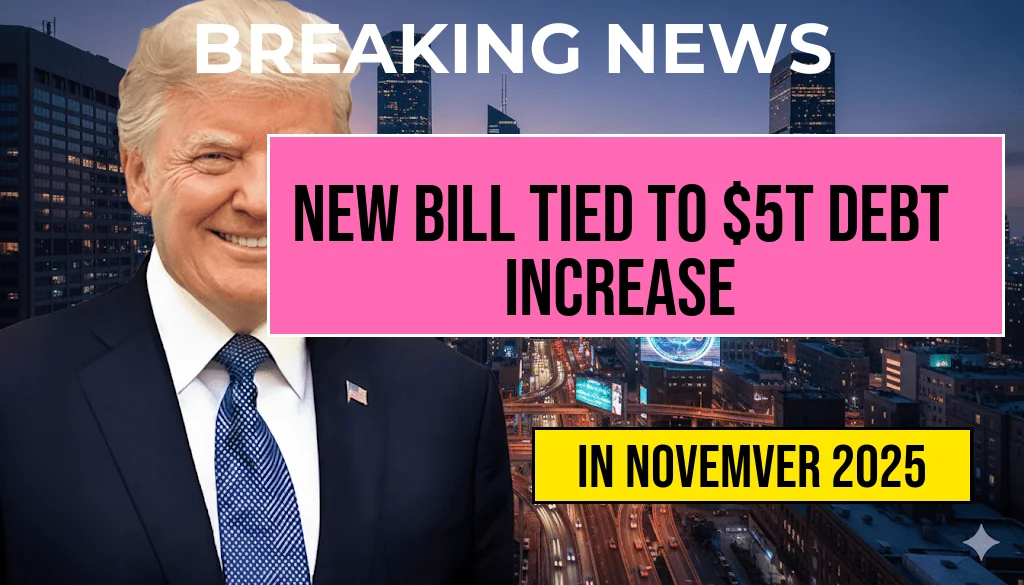
Will another $5 trillion debt ceiling deal burden the U.S. economy?
The prospect of a new U.S. tax and spending bill linked to a $5 trillion debt ceiling increase raises significant concerns among citizens and policymakers alike. How will this monumental agreement impact the nation’s economic landscape? As federal debt spirals to more than $31 trillion, many wonder whether increased government borrowing will yield long-term stability or further exacerbate our financial struggles.
The $5 Trillion Debt Ceiling Deal Breakdown
In recent legislative sessions, Congress has been grappling with a federal debt limit increase in 2025. This potential hike, underpinned by a newly proposed budget bill, is set to temporarily alleviate borrowing constraints for the Treasury. So, what does this entail?
| Key Figures | 2025 Estimates |
|---|---|
| Current National Debt | $31 trillion |
| Proposed Debt Ceiling Increase | $5 trillion |
| Projected Federal Budget | $6.2 trillion |
| Tax Rate Changes | Not Specified |
Still, it’s not pocket change. This new tax and spending bill indicates a profound shift in fiscal policy changes USA, especially as tensions over government funding and taxation continue to simmer. Following the debt ceiling hike, the implications for the economy could be vast, affecting everything from personal tax rates to social services funding.
Understanding the Economic Impact of Debt Ceiling Increases
Every time the national debt expands in the USA, there’s a ripple effect on various sectors of the economy. The government borrowing increase might alleviate immediate financial pressures but could also lead to inflation or increased interest rates. In simpler terms, borrowing more money today can cost us more tomorrow, as taxpayers may face higher costs down the road.
Experts argue that while increased borrowing can stimulate the economy temporarily, it could ultimately lead to rampant inflation. That’s a bit concerning, right? The challenge lies in balancing short-term fiscal needs with long-term economic stability. For households, understanding this potential shift is crucial. They may soon find themselves facing higher taxes or reduced government services as policymakers grapple with these financial choices.
Congressional Responses and Future Projections
The congressional budget hike bill expected to accompany this treasury borrowing cap in 2025 aims to address some of these issues. However, tensions between parties might complicate any efficient response. Democratic lawmakers generally support increased spending for social programs, whereas many Republicans advocate for fiscal restraint and tax cuts. You might say it’s a classic tug-of-war.
| Political Stance | Projected Policy Changes |
|---|---|
| Democratic | Increased Spending |
| Republican | Tax Cuts and Fiscal Restraint |
That might sound dry, but it shapes real choices for retirees and young families alike. The balance, or lack thereof, will affect everything from Social Security benefits to investments in infrastructure. And given the political fragmentation, it’s tough to speculate if both sides can find common ground before the looming deadlines hit.
White House Budget Proposal and Its Implications
The White House has rolled out a budget proposal for 2025 that aligns closely with this new tax and spending initiative. Their vision emphasizes a robust recovery fueled by significant public investment while keeping some fiscal conservativeness in mind. Critics, though, often question whether the administration can keep its spending promises without runaway inflation.
This proposal will inevitably face scrutiny as debates heat up about the potential fallout from such a drastic national debt expansion in the USA. Some analysts suggest benefits might not materialize unless accompanied by a clear strategy to curb long-term debt. You have to wonder, can an economy thrive on debt alone? History suggests skepticism.
Public Sentiment and Potential Outcomes
Public opinion remains divided on the ramifications of the new U.S. tax and spending bill. Many citizens are concerned about the economic impact of the debt ceiling, particularly regarding its effects on their personal finances. Unexpectedly high borrowing could lead to inflation, which would erode purchasing power for ordinary Americans. That concern is tangible, isn’t it?
As these discussions unfold, a consensus seems neither likely nor easy to reach. With all these moving parts, it’s easy to feel overwhelmed. Maybe it’s worth considering that the ramifications of these policies span far beyond Capitol Hill—they touch the lives of average people daily.
Some experts advocate prioritizing sustainable fiscal policies over expansive spending. Balancing this new tax and spending bill with prudent fiscal decision-making might be the best path forward. While lawmakers argue about the best way to stimulate the economy, it’s imperative that they don’t just kick the can down the road.
Ultimately, the challenge remains balancing the immediacy of national needs with the long-term implications of a federal debt limit increase in 2025. As the future unfolds, citizens will need to remain vigilant, engaged and informed about how these financial shifts will affect their lives.
How engaging these issues are anyway; they show how interconnected and critical fiscal policy is to every American’s life.
Frequently Asked Questions
What is the purpose of the new tax and spending bill?
The new tax and spending bill aims to address the $5 trillion increase in the debt ceiling, ensuring the government can meet its financial obligations.
How does the bill impact taxpayers?
The bill may introduce new tax reforms that could affect individual taxpayers, but specific changes will depend on the final provisions enacted.
When is the expected implementation date for the bill?
The exact implementation date will be determined after the bill passes through Congress and receives the necessary approvals.
What are the potential consequences of the debt ceiling increase?
Increasing the debt ceiling can help prevent a government shutdown and protect the nation’s credit rating, but it can also lead to greater long-term debt obligations.
Who will oversee the funding allocated in the bill?
Oversight of the funding will be managed by various government agencies to ensure that allocated resources are used effectively.

Caldwell is an accomplished journalist with over a decade of experience in investigative reporting and editorial writing. With a keen eye for detail and a relentless pursuit of truth, he has contributed to numerous prominent publications, covering a wide range of topics from politics and social issues to technology and environmental concerns. Caldwell’s work has not only earned him accolades from his peers but has also resonated with readers, reflecting his commitment to delivering well-researched and thought-provoking narratives. His ability to distill complex issues into accessible prose has made him a trusted voice in the media landscape.
Driven by an insatiable curiosity, Caldwell is always on the lookout for untold stories that shed light on the human experience. He approaches every assignment with professionalism and integrity, believing that journalism plays a vital role in fostering informed communities. Caldwell’s dedication to ethical reporting and his passion for connecting with diverse voices have established him as a respected figure in the industry. Outside of his writing, he enjoys engaging with audiences through speaking events and workshops, sharing his insights on the evolving nature of journalism and the importance of truth in today’s society.